

Qwen-Image on DashScope: What the New Image Generation and Editing APIs Mean for Your Async Media Pipeline
Alibaba launched Qwen-Image and Qwen-Image-Edit on DashScope as qwen-image-2.0-pro. For routing teams, these introduce a non-DALL-E async job pattern and a new model namespace that standard OpenAI-compatible proxies may not handle correctly.
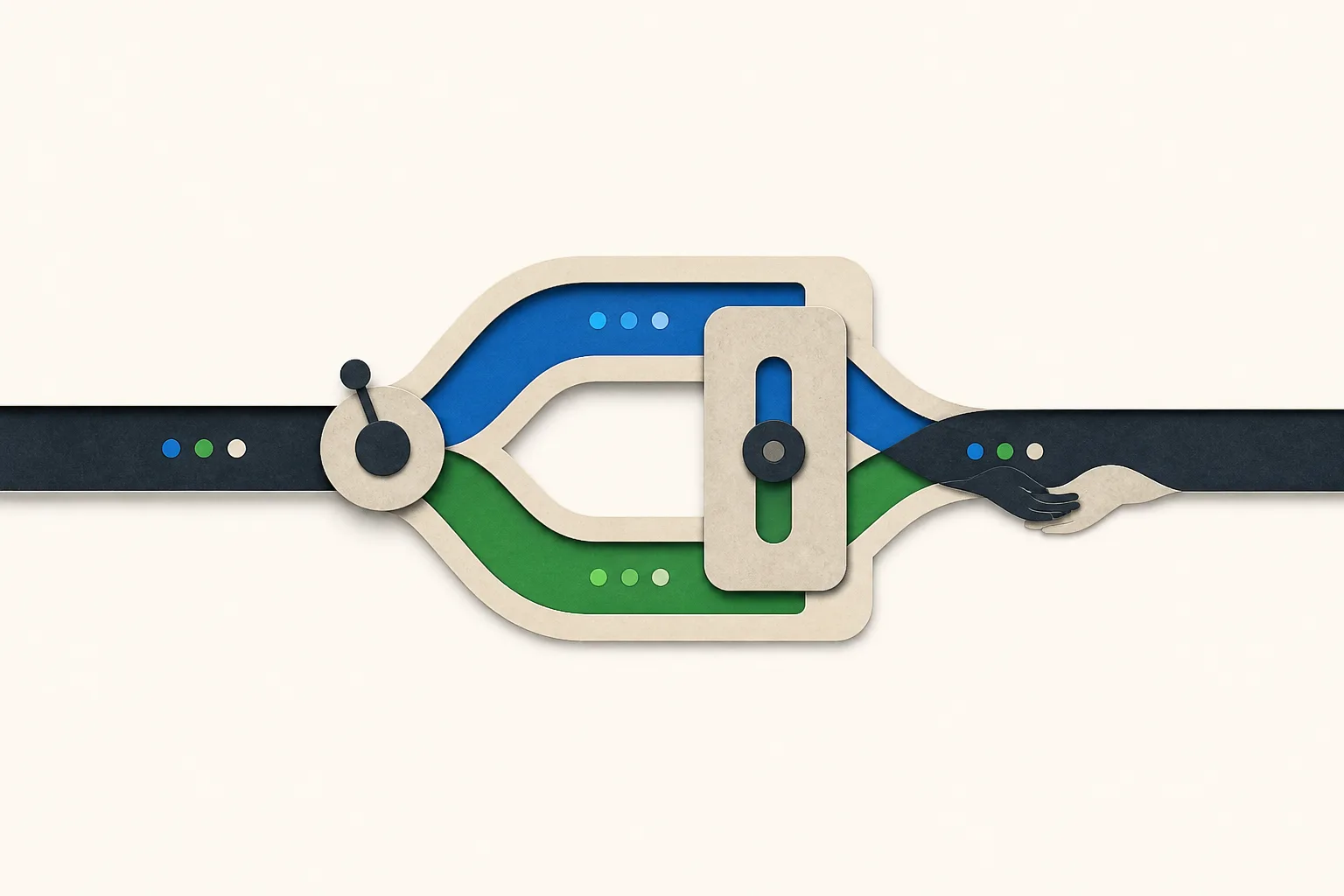
When Alibaba released Qwen-Image and Qwen-Image-Edit to DashScope this week, most of the coverage focused on benchmark numbers and the quality of rendered Chinese characters. The engineering question that matters for AI routing teams is different: how do these models land in the DashScope API, and what does that mean for any gateway or proxy sitting in front of them?
The answer has implications beyond Alibaba's ecosystem. The DashScope model catalog now lists qwen-image-2.0-pro as the active image generation model, alongside existing video and speech generation endpoints. If your routing layer treats all DashScope traffic as a unified /chat/completions namespace, you are about to encounter a mismatch.
What Changed
Alibaba's Qwen team released two related models within days of each other:
Qwen-Image is a 20B MMDiT (Multimodal Diffusion Transformer) image foundation model with two headline capabilities: superior text rendering — including multi-line Chinese and English text with high fidelity — and consistent image editing. It is available on Qwen Chat and via DashScope API under the qwen-image-2.0-pro model ID.
Qwen-Image-Edit extends Qwen-Image to image editing tasks. It handles both semantic editing (style transfer, object rotation, IP creation) and appearance editing (element addition/removal/color modification with controlled region preservation). The model uses a dual-encoder architecture feeding the input image into both Qwen2.5-VL for semantic control and a VAE encoder for pixel-level appearance fidelity. Precise bilingual (Chinese/English) text editing in existing images is a standout capability.
Both models score state-of-the-art on standard image generation and editing benchmarks including GenEval, DPG, GEdit, and ImgEdit. For Chinese text rendering, the gap versus prior models is significant.
Why It Matters for AI Engineering Teams
Teams routing image generation workloads — design tools, e-commerce product image pipelines, document editors, multimodal coding agents — face three concrete decisions:
1. Model ID namespace. DashScope image generation uses a different model family than text generation. The new ID is qwen-image-2.0-pro, not a variant of qwen3.7-max or qwen3.6-plus. If your routing configuration maps all DashScope traffic to text-model IDs, you will send image generation requests to the wrong endpoint and receive unexpected errors or silently malformed responses.
2. API surface differences. DashScope image generation follows a different API path than /chat/completions. The model accepts image generation and editing prompts, but the request and response schemas differ from the standard chat completion format. Gateways that blindly forward model: qwen-image-2.0-pro requests to the text generation endpoint will fail in ways that are not immediately obvious at the application layer.
3. Async job lifecycle. Image generation — whether on DashScope, OpenAI DALL-E, or Replicate — is typically async: the API accepts the job, returns a job ID, and the client polls for completion. If your proxy layer does not correctly handle async image generation job lifecycle (submit → poll /v1/jobs/:id → retrieve result), you risk delivering incomplete responses or swallowing job failures silently.
The Chinese text rendering capability also matters for teams operating in bilingual or Chinese-market contexts. For document pipelines, marketing image generation, or multimodal app builders targeting the Chinese market, qwen-image-2.0-pro is now the strongest option in that tier. Routing policy should reflect this: route Chinese-text-rendering image jobs to this model rather than defaulting to DALL-E or Flux-based endpoints.
The Router/Operator Angle
Most OpenAI-compatible gateways (including many commercial proxies) handle /v1/images/generations as a pass-through with minimal routing logic. The DashScope image generation endpoint requires specific model ID knowledge and may require provider-specific extra parameters.
What routing teams should audit:
- Model ID registry: Does your gateway's model registry include
qwen-image-2.0-promapped to the correct DashScope image generation endpoint? Or is it missing, causing fallback to a wrong endpoint? - Async media handling: When a DashScope image generation request returns a task ID rather than an immediate image, does your gateway surface that job ID to the client correctly, or does it block waiting for a synchronous response that will never come?
- Fallback chains for image generation: If you have a fallback from DALL-E to DashScope image generation (for cost or availability reasons), the fallback path needs to map to the correct DashScope image API endpoint and model ID, not the text completion endpoint.
- Response schema normalization: DALL-E returns images as base64 or URLs in
data[].b64_jsonordata[].url. DashScope image responses may follow a different structure. A gateway layer that normalizes these schemas for downstream clients needs to be updated when a new provider's image endpoint is added.
Qwen-Image-Edit introduces an additional routing decision: a /images/edits-style endpoint that accepts an input image plus a text instruction. The model maps to the same qwen-image-2.0-pro family but likely a separate DashScope endpoint. If you are routing image editing requests today (to GPT-Image-1.5 or Gemini Imagen 3), qwen-image-2.0-pro's editing capability — particularly for Chinese-text assets — is worth evaluating as an alternative in your routing policy.
Cost and regional routing: DashScope charges per-image rather than per-token for image generation. Teams doing cost-optimized routing need to compare against DALL-E 3 / GPT-Image-1.5 / Flux pricing on a per-output-image basis. DashScope's China-region endpoints (Beijing, and international endpoints in Virginia and Singapore) also offer regional routing choices relevant to latency and compliance requirements.
What TheRouter Users Should Watch or Try
For teams using TheRouter or building routing configurations on DashScope:
- Add
qwen-image-2.0-proto your DashScope provider model list if you are routing image generation workloads. Confirm whether the image generation and image editing endpoints require separate provider configurations. - Verify async media job handling in your routing layer. TheRouter's async media path (Async Media docs) handles the submit/poll/retrieve lifecycle for image generation jobs. If you are routing DashScope image generation requests, confirm the endpoint is configured for async handling, not blocking chat-completion forwarding.
- Evaluate for bilingual or Chinese-market pipelines. If your application generates images with embedded Chinese or mixed-language text,
qwen-image-2.0-prois now the most capable option in the open DashScope catalog. Consider a routing rule that directs Chinese-text-rendering requests to this model specifically. - Watch DashScope's international endpoint availability. The model is currently confirmed on the China-region DashScope endpoint (
dashscope.aliyuncs.com). Monitor the US-Virginia and Singapore endpoints (dashscope-us.aliyuncs.com,dashscope-intl.aliyuncs.com) for rollout of image generation model availability.
The key takeaway: Qwen-Image is not just another image model launch. It marks the arrival of a complete image generation + editing pipeline in DashScope's OpenAI-compatible surface — one that requires its own routing configuration, async job handling, and model ID registration to work correctly in a multi-provider gateway.
Related
Latest AI News →
Qwen-MT Turbo: Alibaba's Dedicated Translation API Introduces extra_body Routing Parameters That Standard Proxies May Drop
Alibaba Cloud's new Qwen-MT turbo model arrives via OpenAI-compatible endpoints, but its translation controls live inside extra_body — a pattern that breaks any middleware that strips non-standard fields. Here's what routing teams need to watch.
Qwen3Guard: Alibaba's Open-Source Streaming Safety Guardrail for Multi-Provider AI Pipelines
Alibaba releases Qwen3Guard, an open-weight safety guardrail model with real-time streaming token-level detection. For teams routing across multiple AI providers, it offers a provider-agnostic safety layer you can deploy at the gateway level.

DeepSeek Now Speaks Anthropic: What the New Dual-Format API Means for Your Routing Layer
DeepSeek's API now accepts Anthropic SDK format at api.deepseek.com/anthropic — meaning Claude Code, the Anthropic Python/TS SDK, and any Anthropic-native client can now route requests to DeepSeek V4 models without an OpenAI wrapper.