

Anthropic Acquires Stainless: What SDK Consolidation Means for Multi-Provider API Teams
Anthropic has acquired Stainless, the company that generates every official Claude SDK and MCP server tooling. For teams building multi-provider API pipelines, this reshapes SDK dependency risk, MCP server governance, and the pace of Claude API surface changes.
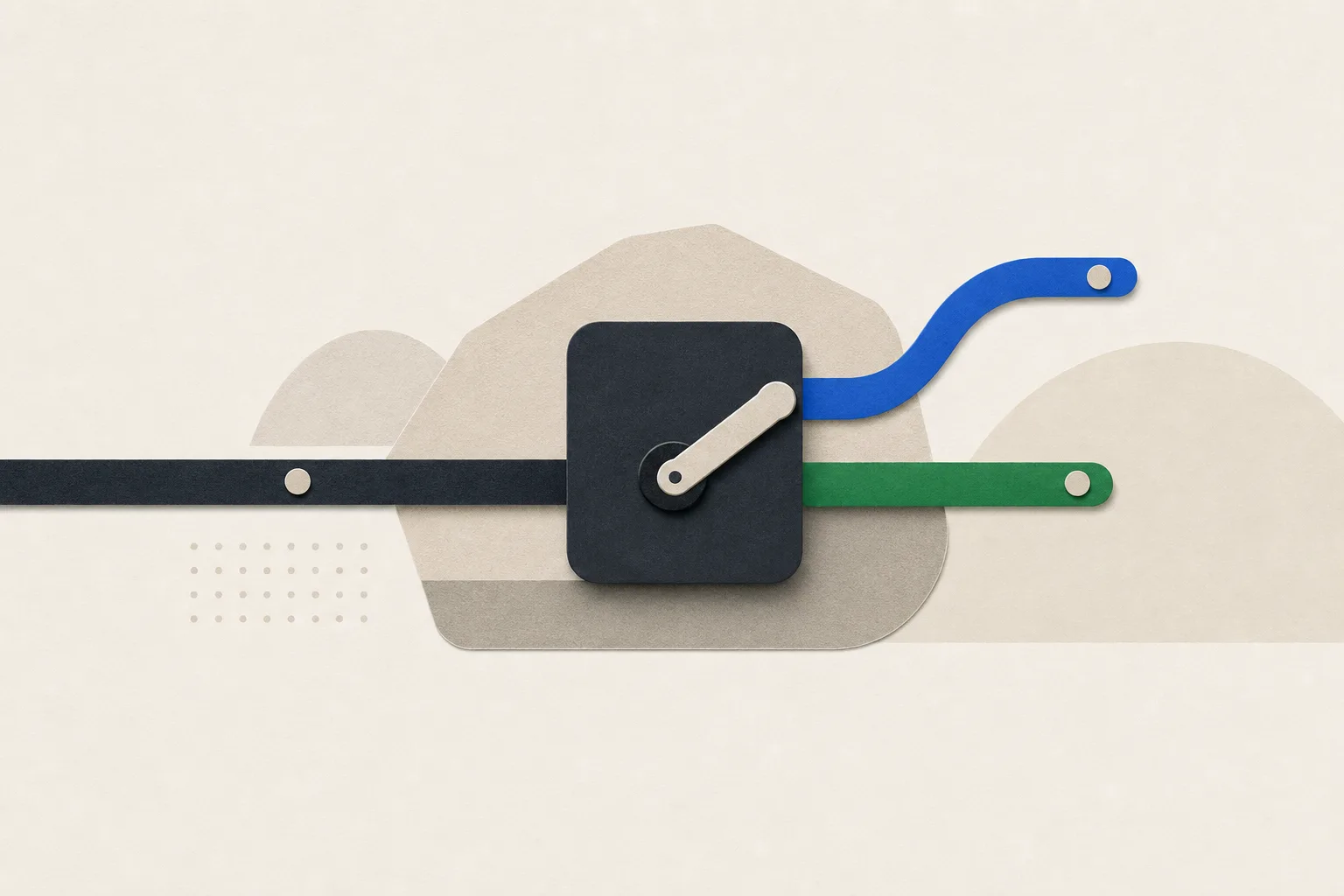
When Anthropic acquires the company that generates every one of its official SDKs, the story isn't just about headcount — it's about who now controls the interface layer between your code and the Claude API. For engineering teams running multi-provider AI pipelines, that distinction matters.
What happened
On May 18, 2026, Anthropic announced the acquisition of Stainless, a developer tooling company founded in 2022 that specializes in generating production-quality SDKs, CLIs, and MCP (Model Context Protocol) servers from API specifications.
Stainless has been the invisible backbone of the Claude developer experience since the earliest days of the Anthropic API. Every official Anthropic SDK — TypeScript, Python, Go, Java — was generated by Stainless tooling. Beyond Anthropic, hundreds of other companies use Stainless to generate SDKs for their own APIs, making it a significant piece of the broader API tooling ecosystem.
The acquisition also covers Stainless's MCP server generation capabilities. Anthropic created MCP to standardize how agents connect to external data sources and tools. Stainless's tooling can generate MCP servers directly from API specs, meaning Claude agents can connect to any Stainless-compatible API with minimal integration work.
Why it matters for AI engineering teams
SDK versioning will accelerate. When the company building the Claude API also owns the SDK generation pipeline, the latency between an API surface change and an updated SDK drops. Teams that currently pin to specific SDK versions to avoid surprise behavioral changes need to build that assumption into their dependency management: Claude SDK releases may ship faster than before.
MCP server quality becomes a first-party concern. Before this acquisition, MCP connectivity was a developer responsibility: you built the server, you maintained it. With Stainless inside Anthropic, generated MCP servers for Claude-compatible APIs become closer to a supported product surface. That raises the bar for what "official connector" means — and it raises expectations that teams will migrate to generated MCP servers rather than hand-rolled ones.
The API spec is now the product. Stainless's entire model is "your API spec should be good enough to generate SDKs from." For teams consuming the Anthropic API, this is a signal that Anthropic intends to invest heavily in spec quality, OpenAPI documentation, and the kind of machine-readable API contracts that make downstream tooling reliable. A well-defined, spec-driven API is easier to route, proxy, and version.
Vendor dependency risk shifts. Teams that relied on Stainless to generate SDKs for non-Anthropic APIs now face a governance question: will Stainless continue to serve competing providers equally? Anthropic says Stainless will "keep doing the work they love," but the competitive dynamic is real. Engineering teams using Stainless-generated SDKs for OpenAI, Mistral, or other providers should assess whether SDK generation for those providers remains a first-class Stainless priority.
The router/operator angle
For teams running multi-provider AI routing pipelines, this acquisition introduces several considerations worth tracking:
SDK interface stability across providers is now asymmetric. The Claude SDK will likely see faster iteration; other provider SDKs generated by Stainless may see slower updates or diverging quality. If your routing layer normalizes requests across providers using their respective official SDKs, SDK-level behavioral differences — method signatures, streaming behavior, error types, retry semantics — could surface more quickly on the Claude side.
MCP becomes a Claude-native advantage, not a neutral standard. MCP was already Anthropic's protocol, but with Stainless inside Anthropic, the tooling to build MCP servers is now inside Anthropic too. Teams choosing between MCP and other tool-connectivity approaches should factor in that MCP's reference toolchain is now tightly controlled by one provider. For routing gateways, this is relevant if you're building provider-agnostic tool connectivity.
OpenAI-compatible routing and SDK compatibility. Anthropic's official SDKs expose the Anthropic message format, not the OpenAI format. For teams routing through an OpenAI-compatible gateway (including TheRouter), the relevant SDK is the OpenAI SDK or a compatible client — not the Anthropic SDK directly. The Stainless acquisition doesn't change how OpenAI-compatible routing works, but it does signal that Anthropic's investment in developer experience will increasingly concentrate around Claude-native surfaces.
What to watch in coming months:
- Whether Stainless continues publishing SDK generators for OpenAI, Mistral, and other non-Anthropic providers at the same cadence.
- Changes to the Anthropic OpenAPI spec quality and spec-driven documentation — these will flow downstream into routing gateway compatibility and SDK generation for any tooling that reads the Anthropic API spec.
- The pace of MCP server tooling releases and whether "generated MCP servers" become a recommended path for Claude agent connectivity in official Anthropic docs.
What TheRouter users should watch or try
If you're routing Claude requests through an OpenAI-compatible gateway, the Stainless acquisition doesn't change your immediate setup — you're using OpenAI-compatible SDKs, not the Anthropic SDK directly. The key things to watch:
- Claude SDK major version bumps: with Stainless in-house, Anthropic can ship SDK changes faster. If your team uses the Anthropic SDK alongside an OpenAI-compatible client, pin your Anthropic SDK version in lockfiles and test against upgrades explicitly.
- MCP server tooling: if you're building agent workflows that connect Claude to external tools via MCP, monitor the Stainless/Anthropic tooling releases for generated MCP servers — they may reduce the maintenance burden of hand-rolled connectors.
- API spec changes: a better-maintained Anthropic OpenAPI spec means routing gateways and API proxies can more reliably parse and forward Claude-specific parameters. Watch for spec changes that add or modify request fields — these sometimes precede model behavior changes.
For teams managing multiple providers — Claude, OpenAI, DeepSeek, Qwen — the practical takeaway is to ensure your SDK version management and dependency update policies account for the possibility of faster Claude SDK iteration cycles.
Related
Latest AI News →
DeepSeek Now Speaks Anthropic: What the New Dual-Format API Means for Your Routing Layer
DeepSeek's API now accepts Anthropic SDK format at api.deepseek.com/anthropic — meaning Claude Code, the Anthropic Python/TS SDK, and any Anthropic-native client can now route requests to DeepSeek V4 models without an OpenAI wrapper.
AI Cost Increases 2026: Why List Price is No Longer Enough
OpenAI, Anthropic, and GitHub changed pricing models in the same week. List price gaps reach 92% depending on tokenizer behavior and usage patterns. Routing architectures are now essential for cost control.
OpenAI Embeds C2PA + SynthID in Every API-Generated Image: What It Means for Your AI Pipeline
OpenAI is now a C2PA conforming generator with Google SynthID watermarks in every API-generated image. Every output carries a cryptographic provenance fingerprint — affecting audit trails, fallback routing, and enterprise content governance.